470 Mamaroneck Avenue Suite 304
White Plains, NY 10605
914.946.7676
[email protected]
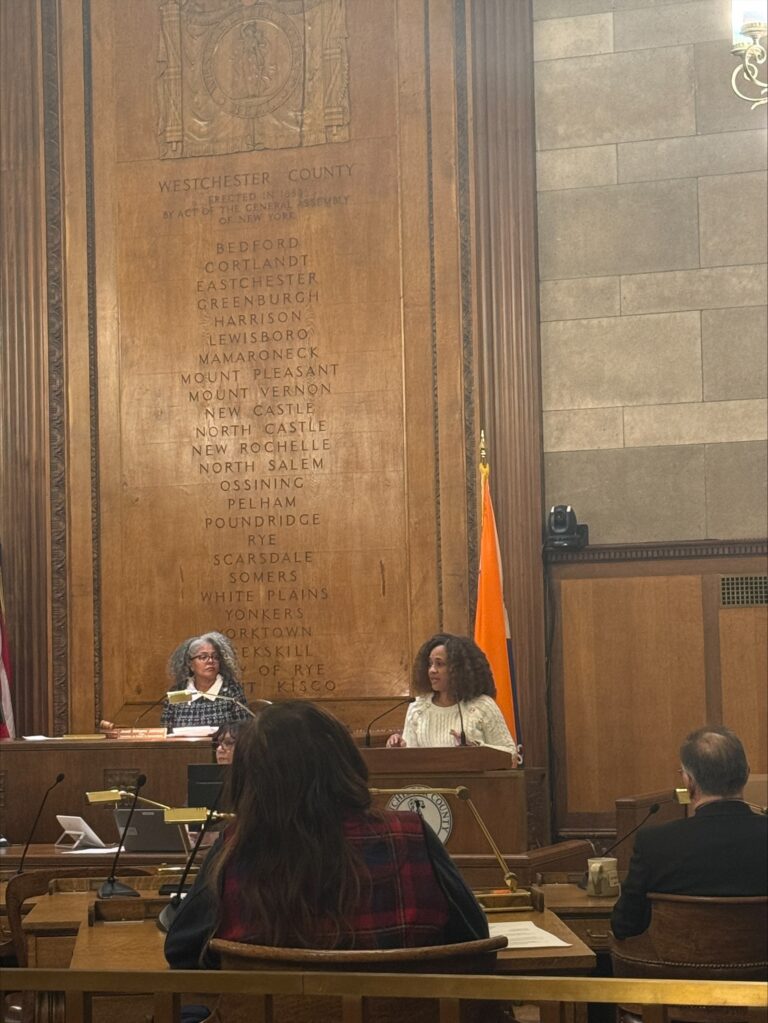
At a recent Westchester County budget forum, Westchester Children’s Association board member Vanessa Kaye Watson spoke about the connection between childcare, housing, and economic stability for families. Her story reflects the experiences of many parents across the county and shows why these issues are central to WCA’s 2026–27 New York State Budget priorities.
Watson has lived in Westchester County for more than 30 years and raised her two children in White Plains public schools. Like many working parents, she knows how difficult it can be to balance a job, childcare, and the high cost of living.
When her children were younger, she commuted to Manhattan for work and needed extended childcare from early morning to evening. The cost was high, but it was the only way she could keep her job.
She remembers wondering how families with fewer resources manage. Without quality, affordable childcare, it is nearly impossible for parents to work. It is hard to focus on your job when you are worried about your children’s safety and well being.
Her experience reflects what WCA hears from families across Westchester every day. Childcare and housing are deeply connected. When one becomes unaffordable or unavailable, the other is often at risk.
Watson thanked County Executive Ken Jenkins and local leaders for their efforts to support families and acknowledged how difficult it is to manage a county budget. At the same time, she emphasized that essential services like childcare and housing should not be where cuts are made.
The proposed 1.3 million dollar reduction to the Westchester Works Childcare Scholarship, from 3.3 million to 2 million, raised serious concerns about more than 200 children losing access to care while their parents worked.
After strong advocacy from community members, providers, and organizations like WCA, the county ultimately restored part of that funding. The final adopted budget includes 2.5 million dollars for the childcare scholarship, a meaningful step that will help more families stay in the workforce. While this restoration is important, it still falls short of the original 3.3 million dollar level, and many families will continue to face barriers to affordable care. WCA will continue to advocate for the full investment that Westchester’s children and working parents need.
“It is a vicious cycle,” Watson said. “You have to work to support your children, but you cannot work if you do not have childcare. And if you cannot work, how do you pay for housing?”
With childcare in Westchester averaging close to 20,000 dollars a year, even modest funding cuts can have serious consequences. Watson also urged leaders to maintain 4 million dollars in funding for the Office of Housing Counsel’s Eviction Prevention Program, which helps keep families in their homes.
Her message reflects WCA’s 2026–27 New York State Budget recommendations, which call for continued and increased investment in childcare, housing stability, and other supports that help children and families thrive. These recommendations are rooted in what families are experiencing across the county. When childcare is affordable and housing is stable, parents can work, children can learn and grow, and communities become stronger.
When these systems are underfunded, families are forced into impossible choices between paying for care, paying rent, or keeping a job.
Every dollar removed from these services represents a child, a family, and a future at risk.
WCA will continue to advocate at the county and state levels for budgets that prioritize the well being of children and families. Investments in childcare and housing are not just budget lines. They are the foundation that allows children to grow up healthy, safe, and prepared for life’s challenges.
As Watson reminded county leaders, protecting these programs is ultimately about protecting Westchester’s future, its children.
To provide the best experiences, we use technologies like cookies to store and access device information. By consenting, you allow us to process data such as browsing behavior or unique IDs on this site. If you do not consent, you may close this pop-up or refer to our [Privacy Policy] for more details on managing your cookie preferences. Withdrawing consent may adversely affect certain features and functions.